The Divine Comedy by Dante, Illustrated, Purgatory, Complete
Dante Alighieri
Public domain worldwide
34 chapters · 77 paragraphs
Medieval Christian cosmology set in a timeless spiritual realm, blending classical Roman references with Renaissance Italian sensibilities. The overall visual tone should be solemn, allegorical, and progressively more luminous and celestial as the narrative ascends, with rich use of light and shadow to convey moral and spiritual transformation.
Characters
Dante Alighieri
A medieval Italian poet in his mid-thirties, dressed in period robes of muted earth tones. Dark hair and beard, with an expression of spiritual contemplation and moral earnestness; often depicted with a slightly worn, scholarly appearance reflecting his journey through the afterlife.
Virgil
An ancient Roman poet of dignified bearing, typically shown as a mature man with classical features and draped in Roman toga or classical garments. He appears wise and protective, serving as Dante's guide with a serene, authoritative presence.
Beatrice
A ethereal, beautiful woman of noble bearing, typically depicted with golden or light-colored hair, wearing flowing white or celestial robes. Her expression is compassionate yet distant, radiating divine grace and spiritual purity.
Settings
Purgatory
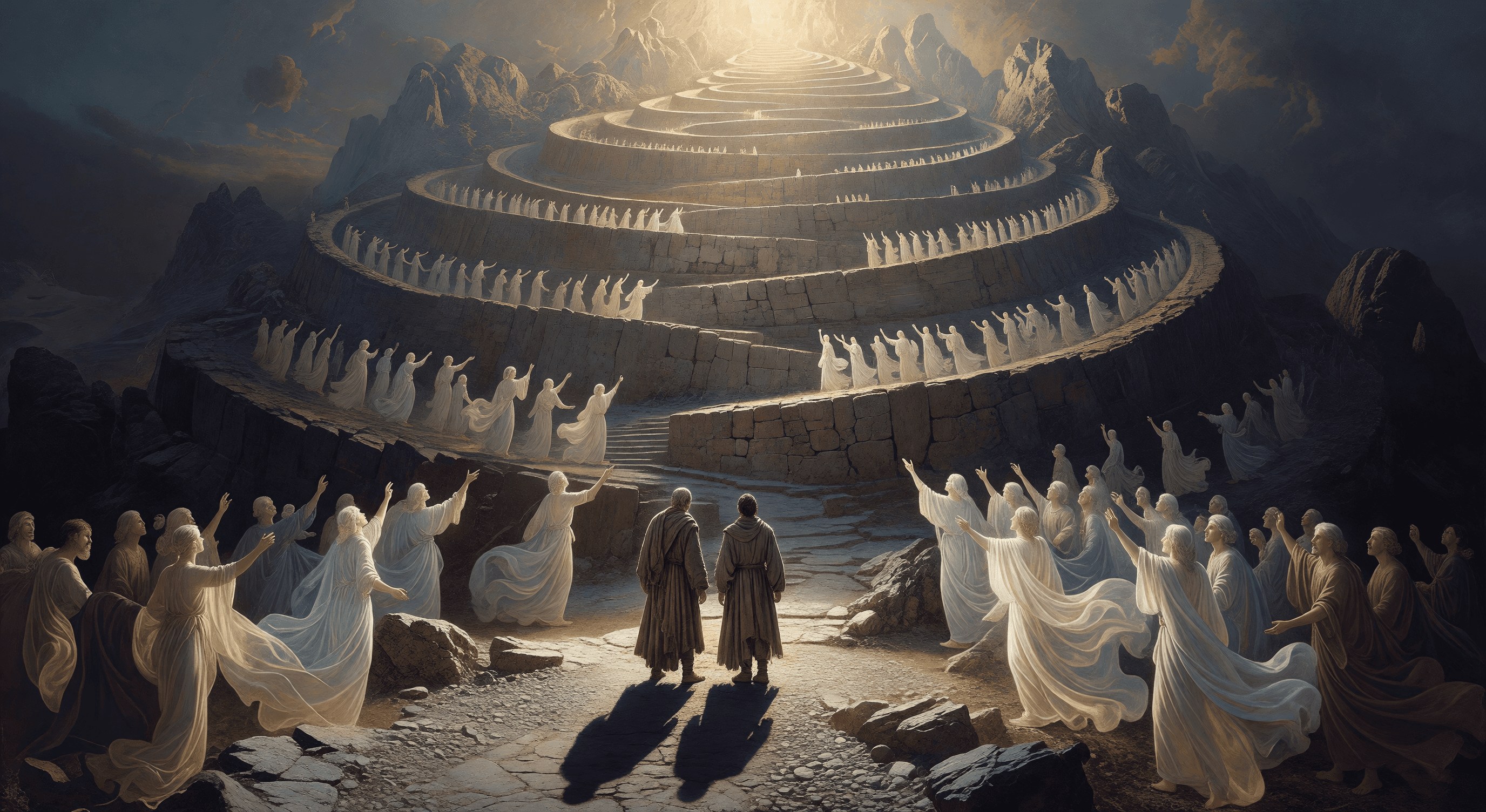
A mountainous realm with ascending terraces and spiral pathways carved into stone, illuminated by otherworldly light. The atmosphere transitions from shadowy to increasingly luminous as one ascends, with classical architecture interspersed among natural rocky formations.
The Celestial Spheres
Ethereal cosmic realms filled with divine light, radiant planets, and stars arranged in concentric circles. Colors emphasize sapphires, golds, and luminous whites; the visual tone is transcendent and immaterial, contrasting with earthly forms.
Contents
- The Project Gutenberg eBook of The Divine Comedy by Dante, Illustrated, Purgatory, Complete
- CANTO I
- CANTO II
- CANTO III
- CANTO IV
- CANTO V
- CANTO VI
- CANTO VII
- CANTO VIII
- CANTO IX
- CANTO X
- CANTO XI
- CANTO XII
- CANTO XIII
- CANTO XIV
- CANTO XV
- CANTO XVI
- CANTO XVII
- CANTO XVIII
- CANTO XIX
- CANTO XX
- CANTO XXI
- CANTO XXII
- CANTO XXIII
- CANTO XXIV
- CANTO XXV
- CANTO XXVI
- CANTO XXVII
- CANTO XXVIII
- CANTO XXIX
- CANTO XXX
- CANTO XXXI
- CANTO XXXII
- CANTO XXXIII